Energy efficiency
A More Comfortable Home: The Benefits of Polyurethane Foam Insulation
Fewer heat losses, more pleasant temperatures and a better planned budget. A practical guide on the benefits of insulation and the correct assessment of investment.

What you'll find out
- insulation and sealing work together for comfort.
- Savings depend on home, use and the solution designed.
- A useful offer shall specify the material, thickness and all works included.
A house may have a modern central, good windows and a carefully adjusted thermostat, but to remain unpleasant in the cold days. Sometimes the heating works a lot, and next to the ceiling, in corners or in the rooms at the last level the feeling of cold persists. Before you invest in a stronger equipment, it's worth checking how well the energy you already pay for keeps. The foam insulation of polyurethane may be part of this improvement, if chosen and applied to the actual housing situation.
The benefit pursued is not limited to a lower bill. For a family it also counts a room where you work comfortably, a more stable evening temperature and the possibility to use the whole house. This guide helps you link the material's benefits to the practical questions you deserve to ask before the work.
1. Less energy lost by the building envelope
Walls, roofs and boards separate heated space from outside or from unheated rooms. An insulated layer reduces the heat transfer through the element it protects. Sealing treats a different problem: the uncontrolled circulation of air through voids and couplings. The two measures should be coordinated together with the ventilation of the house. The US Department of Energy explains this approach in guide on insulation and sealing of the building.
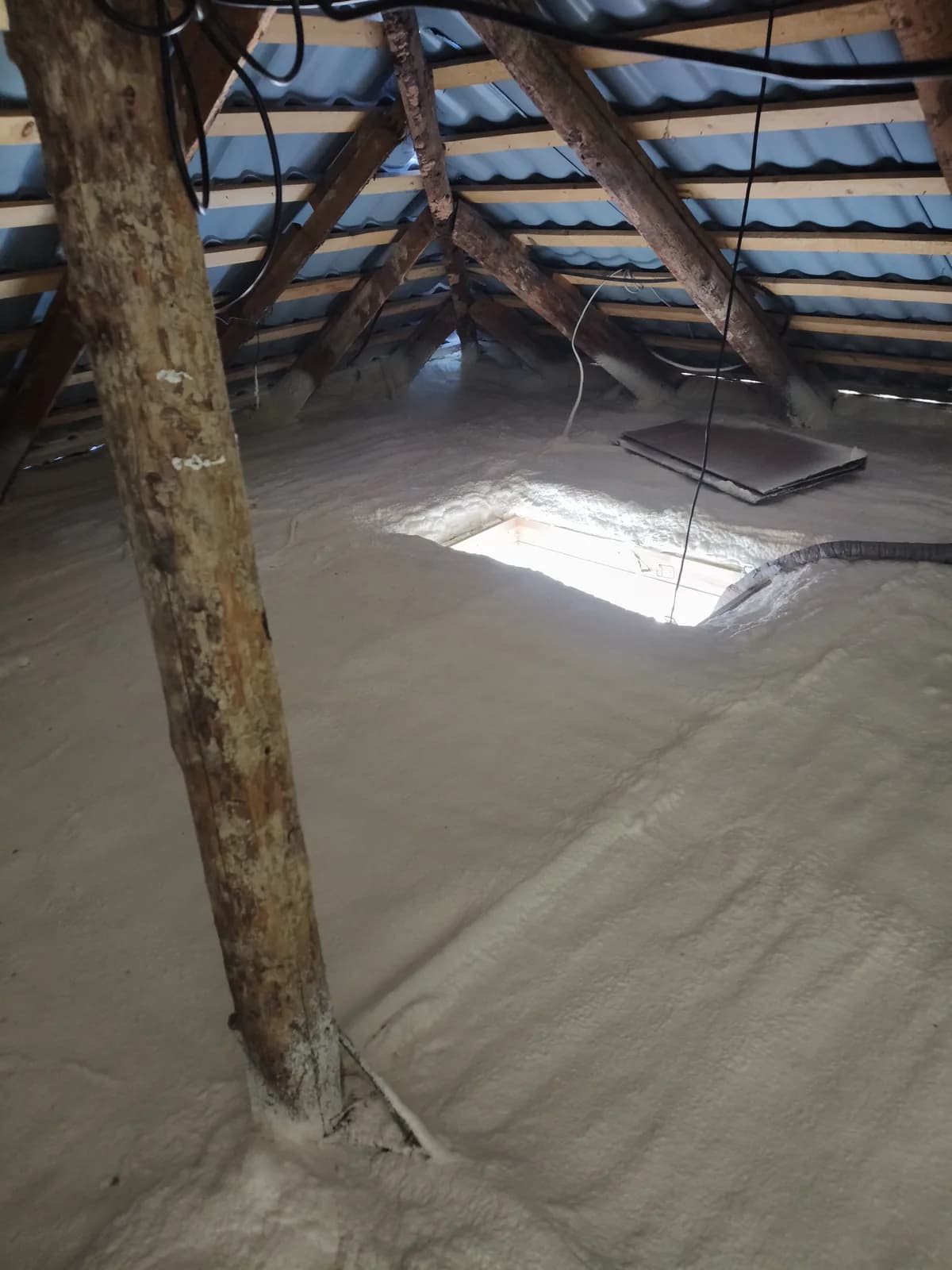
In the discussion with the performer, the route of the insulation layer shall be identified. For example, if the attic remains unheated, the intervention may target the plank to the top floor; if the attic becomes habitable, the project will change. The choice should not be made only after the most easily accessible surface. A simple sketch with the areas included and those excluded is worth more than a general promise of efficiency.
2. A material that adapts to difficult details
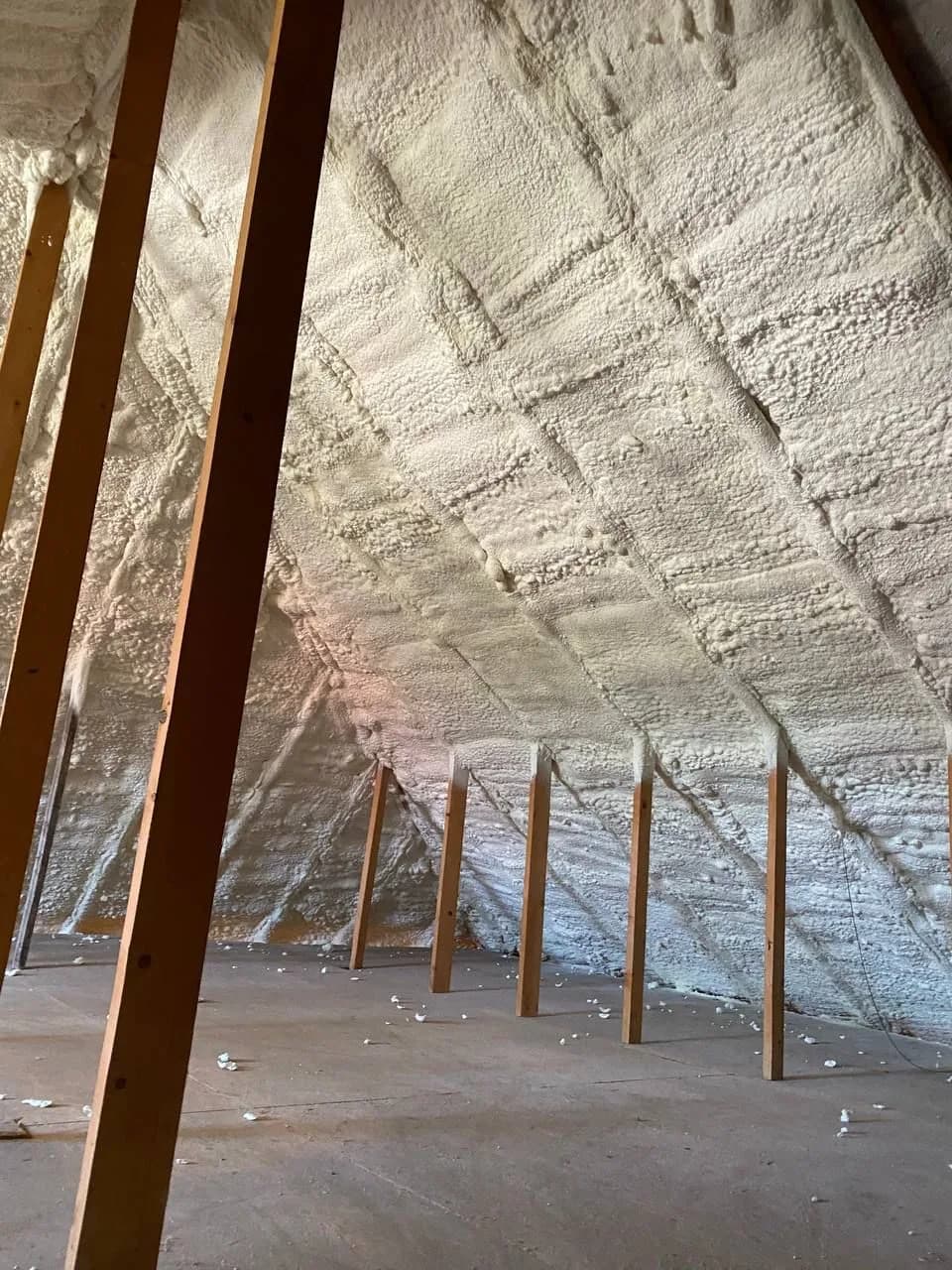
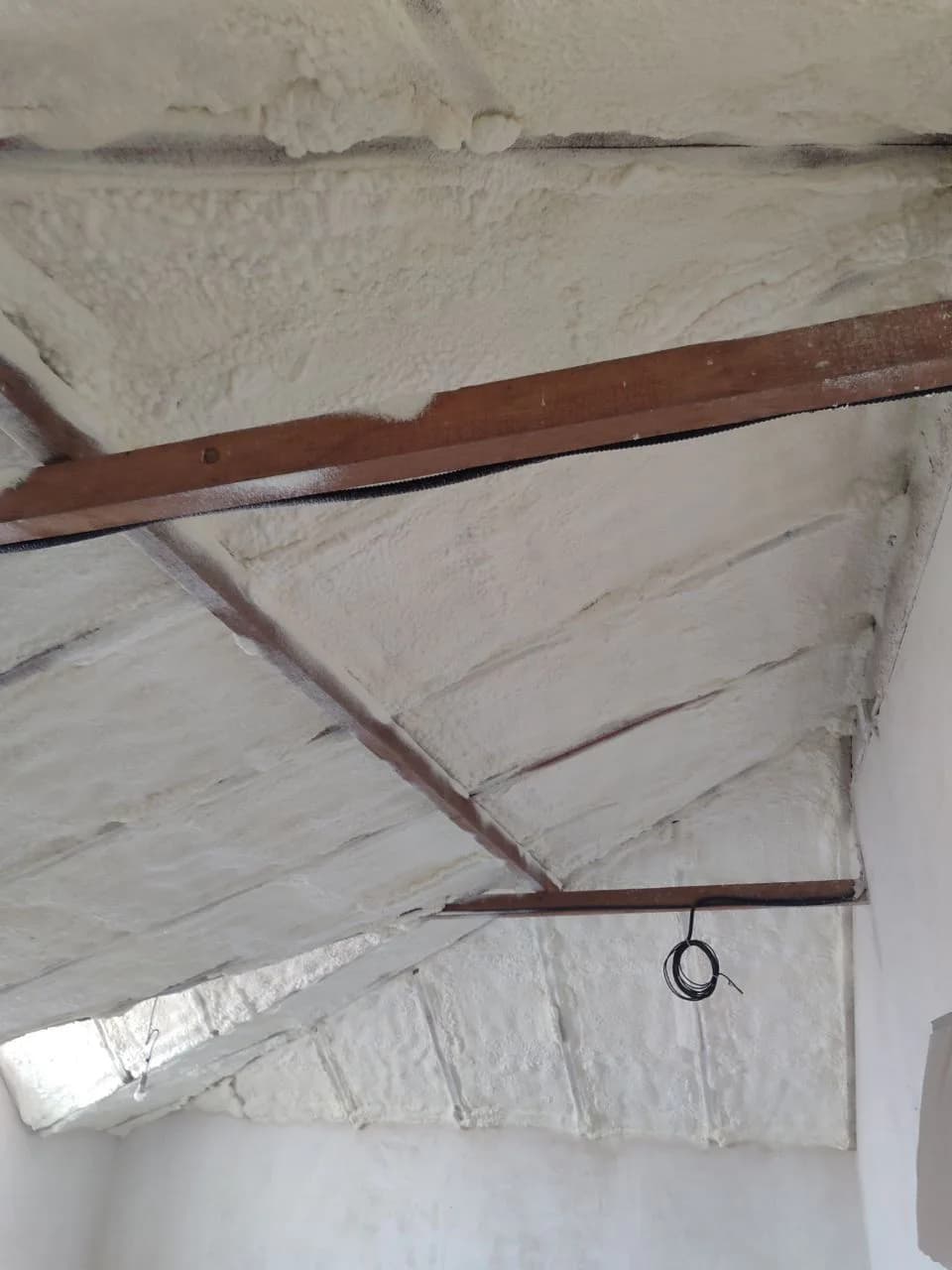
The foam applied to the yard follows the geometry of the substrate and can be useful in areas with irregular shapes. Around certain joints, a continuous application can contribute to limiting air infiltration. Link details between building elements deserve special attention as local interruptions can affect the whole of the building. A technical example of this principle appears in Building Science documentation on sealing at joints.
This does not mean that spraying automatically eliminates every thermal bridge. Beams, ring beams, brackets and junctions each behave differently. Ask how these details will be treated and how thickness will be checked, including at the edges. Adaptability becomes an advantage when details are designed and checked properly, rather than when a surface merely looks even in a photograph taken from a distance.
3. Daily comfort may be more relevant than a percentage
Think about the investment starting from the moments when the house does not offer you comfort. Is the office cold in the morning? The baby's room warms up hard? Do you frequently use an extra radiator in a single room? Write down these situations before the assessment. They give the specialist a starting point and then help you to appreciate the result in relation to a concrete need.
A better insulated home can provide better conditions without repeated changes in the thermostat, but the result depends also on windows, shade, installations and ventilation. Summer, for example, a large room with sun-oriented windows may need sun protection. insulation is an important component, but comfort is built by several decisions that complement each other.
4. How you realistically assess heating savings
There is not a percentage of economy valid for all houses. Two dwellings with the same surface may have different roofs, other internal temperatures and completely separate use programmes. For a serious estimate, prepare the consumption of the last seasons, the type of heating and the information on the existing insulation. If you have invoices, separate as much energy as possible for heating from hot and cooked water consumption.
After renewal, it compares consumption in energy units, not just the amount paid. A changed rate can hide or exaggerate an improvement. It also matters how cold the season was and whether you started heating a previously unused room. For a precise analysis, discuss with an energy auditor the adjustment of the comparison to these differences. A monthly table with observations is a useful start.
5. The choice of the foam must be linked to the project
The name ‘polyuretan foam' covers products with different properties. Ask what exactly the proposed material is, what thermal performance it declares and how thick it will be applied. Requests the technical file and explanation of the compatibility with the substrate. General presentation of the types of insulation published by Building Science Education shows why materials cannot be compared only by trade name.
For the owner, a good comparison means two offers for the same result pursued. If one includes the preparation of the substrate and the final protection, and another only mentions spraying, prices per square metre are not directly comparable. Separately request the measured surface, thickness, auxiliary work, access and warranty conditions. So you can understand where the budget goes and what you actually get.
6. Budget: complete work
The IsoThermLux calculator uses an indicative rate of 300 MDL per square metre. For an example area of 100 m², the calculation is 100 × 300 = 30,000 MDL. This is an estimate, not a quote for a specific system or thickness. The condition of the building and the work required can change the final amount. Use price calculator to start the discussion, then ask for a detailed offer.
In addition to the cost of the material, it plans any repairs, protection of goods and finishes. If you are renewing in stages, set the order so that you do not later unravel a finished fresh ceiling to correct an omitted link. A coherent plan can avoid repeated expenditure and gives you a clearer picture of total investment even before you calculate recovery from savings.
7. Preparation and safety are part of the outcome
Prior to insulation, infiltrations and substrate problems should be assessed and addressed. The approach of the whole house, including the installation and ventilation, is described by DOE in presentation on the energy modernisation of the house. Pentru proiectul tău, cere un calendar care să includă pregătirea, aplicarea, verificarea și predarea, nu doar ziua în care ajunge echipa.
Professional application requires control of access and exposure to the substances used. Occupants and animals shall comply with the indications of the team and of the manufacturer concerning the exit from the area and return. Don't use a universal number of hours as a rule. EPA recommendations for the use of foam stresses the importance of protection and ventilation during and after work.
8. What to ask at the end of the work
At handover, inspect the agreed areas together with the contractor. Ask for the material documents, the specified thickness and how it was checked, photos of areas that will be concealed, and maintenance requirements. Record any areas needing further attention before finishing. It is easier to clarify these points now than after furniture is installed and ceilings are closed.
Keep the offer, documents and comments on consumption in a single file. The benefit of a well-chosen insulation is a home better adapted to the way you live, with reduced losses in the treated areas and an investment that you can pursue. For recommendations applied to your home, send photos, location and approximate area through contact page. O evaluare concretă este primul pas către o decizie informată.
Next step
Let's talk about your building.
An evaluation helps you to choose the material, thickness and work appropriate to your situation.